What's actually in the air
Indoor allergy triggers are mostly tiny pieces of things you live with: pet dander (skin flakes and dried saliva), dust mite droppings, pollen that rides in on clothes and through windows, and mould spores. Some of it floats for a while after it's stirred up by walking, vacuuming or a dog shaking off at the door; much of it settles into bedding, carpets and the couch.
That split matters. An air purifier can only catch what's in the air. What's settled in fabric has to be washed out. The best results come from doing both.
- Fine pet dander, after brushing or a cuddle
- Pollen that came in through windows
- Dust stirred up by vacuuming
What reaches it: a HEPA air purifier sized for the room, door closed.
- Dust mites in bedding and mattresses
- Dander in the couch and rugs
- Pollen on clothes and hair
What reaches it: hot-water washing every week, a HEPA vacuum, humidity under 50%.
Pollen adds a seasonal layer. In much of Canada, tree pollen starts in spring, grasses follow in early summer and ragweed runs into the fall. On high-pollen days it comes in on clothes, hair and pets as much as through windows, so a change of clothes and a quick wipe of the dog's coat at the door do more than you'd expect.
An honest expectation
HealthLink BC says an air cleaner with a HEPA filter can help remove some allergens (such as pollen or pet dander)
.1 Note the words some and help. The US EPA reviewed the research and put it plainly: for allergy and asthma symptoms, studies do not always show major improvements, and they do not show improvements in all symptoms
.2
An air purifier is one part of an allergy plan, not the whole plan.Our summary of the EPA's guidance2
We'd rather tell you that up front than sell you a box that promises to fix everything. If allergies or asthma are affecting your sleep or breathing, start with your doctor or pharmacist; the steps below work alongside their advice.
Start with the source
The EPA's first rule for any indoor pollutant is that filtration does not replace the need to control pollutants and ventilate
.2 For allergens, that means:
- Wash bedding weekly in hot water. HealthLink BC:
Wash bedding, including pillowcases and mattress covers, in hot water every week.
1 - Keep humidity at or below 50%.
Dust mites do well where humidity is greater than 50% but don't do well in dry conditions.
1 Health Canada's target for homes is 30 to 50%.3 - Skip window fans in pollen season. HealthLink BC advises against window or attic fans,
which bring air containing pollen, mould spores, and other allergens into your home
.1 - Give the bedroom priority. You spend a third of your day there, so it's the room where cleaner air and fresh bedding count the most. Many households with pets make it a pet-free room, at least at night.
Choosing an air purifier for allergies and pets
HEPA first
Look for a true HEPA filter. That's the filter type both HealthLink BC and Health Canada point to for removing fine particles.1,4 Avoid devices that produce ozone; Health Canada says ozone can harm your health
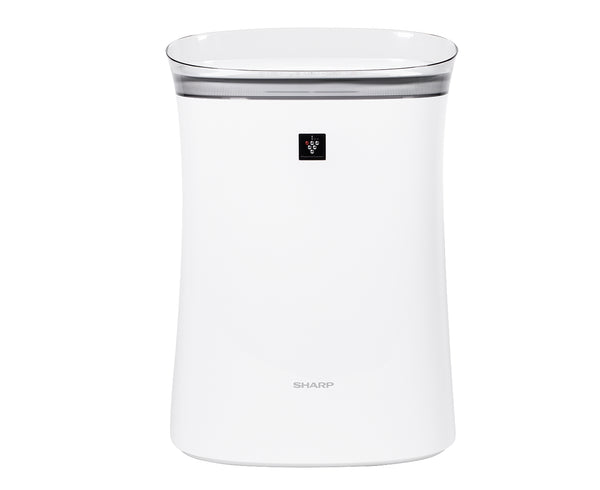
.4 Sharp's Plasmacluster models release ions. Sharp's product data lists the FP-K50UW as CARB-certified; California's air-cleaner certification includes an ozone emissions test, and its list of certified devices is public. For any other model, ask us and we'll check it for you.
Size it with the pollen and dust CADR
CADR (clean air delivery rate) is tested on three particles: smoke, dust and pollen. For allergies, the dust and pollen numbers are the ones to read. A simple rule borrowed from Health Canada's guidance is to pick a CADR of at least two-thirds of the room's floor area in square feet.4 The EPA's sizing table lands in the same place: about 130 cfm for a 200 sq ft room.2
| Model | Dust CADR | Pollen CADR | Room (Sharp) | Quietest |
|---|---|---|---|---|
| Sharp FP-K50UW | 171 | 188 | 259 sq ft | 22 dB |
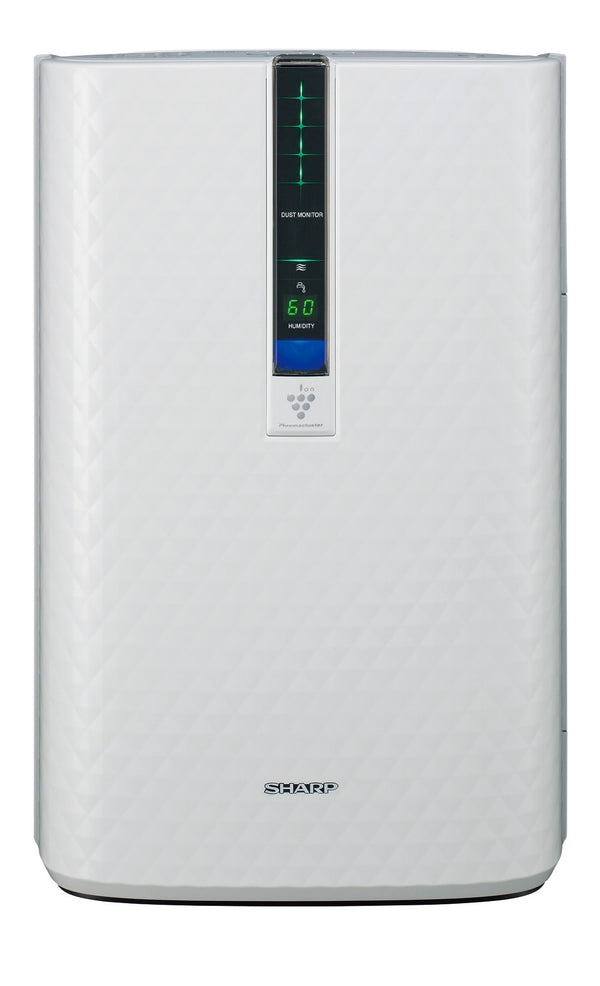
| Sharp KC860U | 231 | 245 | 341 sq ft | 28 dB |
Quiet enough to run all night
A purifier only works while it's on. If it's loud, people turn it off at bedtime, which is exactly when it should run. Check the decibel rating on the lowest setting: under 30 dB is a whisper.
Pets and pre-filters
Pet hair is big and heavy: most of it settles on the floor or gets caught by the purifier's pre-filter long before it reaches the HEPA layer. In shedding season, check the pre-filter every couple of weeks and vacuum it gently. A clogged pre-filter cuts airflow, and with it the CADR you paid for. If the purifier shares a room with the dog bed, keep a few inches of space around the intake so the bed doesn't block it.
Place it where you breathe
Put it in the bedroom, a few feet from the bed, with nothing blocking the intake. Close the door so it's cleaning one room, not the whole floor. In shared spaces, put it where the pet spends its time.
A note on humidifiers and allergies
Dry winter air is uncomfortable, but over-humidifying feeds dust mites and mould. If you run a humidifier, use a hygrometer (Health Canada calls it an inexpensive tool available at most hardware stores
)3 and keep the reading between 30 and 50%. Our dry winter air guide covers how.
A weekly routine that works
- Run the purifier in the bedroom every night, on auto or low.
- Wash bedding in hot water once a week.
- Vacuum with a HEPA-filter vacuum, then run the purifier on high for an hour after.
- Brush pets outside when you can.
- Check humidity: 30 to 50%.
- Check the pre-filter monthly; replace HEPA filters on Sharp's schedule (about 2 years for the FP-K50UW's filter, $79.99 on this store).
Sources
- HealthLink BC (Government of British Columbia). Controlling dust, dust mites and other allergens in your home.
- US Environmental Protection Agency. Guide to Air Cleaners in the Home.
- Health Canada. Reduce humidity, moisture and mould.
- Health Canada. Using a portable air cleaner to improve indoor air.
- Product figures (CADR, room size, noise, filter life, prices): Sharp Canada product data as listed on this store.
This guide is general information, not medical advice. If you have symptoms or a health condition, talk to a health care provider.